
At Team Heartbeats, we often talk about resilience and what resilience is.
Because what exactly is resilience? And how can you, your team, or your organization develop resilience?
You can read more about it on this page. Because resilience is like a muscle you can train.
When we talk about resilience, we are talking about the ability to recover and cope with setbacks, change and stress. We see resilience as a "muscle" that you can train.
Being resilient means being able to stay positive, forward-looking and strong despite setbacks. After major setbacks or changes, this usually involves emotions; feeling and accepting these emotions is the first step to being resilient.
Think of resilience as a line from 0 to 100. A setback, big or small, for example while working with colleagues or in your personal life, can just put you at 0. Even if you are resilient. Resilience lies in the ability to recover again.
Resilience is important for everyone. When you drive without shock absorbers, a threshold comes hard. However, we offer more than a set of shock absorbers with our training courses.
When you arrive resiliently at that same threshold, not only do you know that the blow will be less, but you yourself will proactively slow down beforehand.
In the workplace, you will thus proactively manage workloads better, collaborate better with colleagues and improve communication in a team. Resilience is there not only to better cope with the impact of setbacks but also to better anticipate them.

What is a setback for one person need not be so for another. We are all different in life and have all been marked differently by experiences in our careers.
Get started with your resilience through coaching programs, workshops or discover your growth and development opportunities with reflACT. Gain insight into where the motivation is, where things may change and where there is room for better communication.
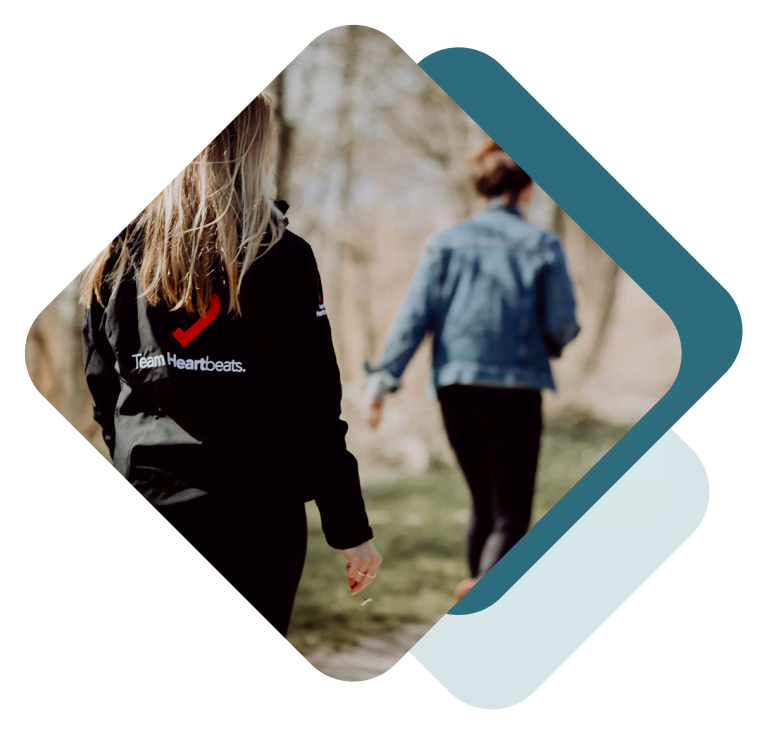
Change in work atmosphere? Reduced workload? Everyone in the workplace walks around with thoughts and feelings. Employees are motivated or totally not. But do they talk to each other? Do they know what is going on? Why someone is not feeling well? Or why that one colleague always comes up with the best ideas? Why does he or she succeed?
Resilience also means "learning to listen. To yourself, your own body but absolutely also to each other. Surround yourself with the right people around you, then you already have a large part of your resilience to deal with!
Being resilient sounds like one verb. One muscle, one shock absorber. No, resilience consists of multiple facets. You can look at individual aspects, such as are you yourself healthy? Happy? But your environment is also important. Do you worry a lot about the people around you? Or perhaps you need to be taken care of a lot? Are there big changes in your life? And do you possess enough qualities to deal with them well?
All of these things affect your resilience. All in all, we offer a method that breaks down development in resilience into 5 separate topics. Let's look at the shock absorber we discussed earlier....
The shock absorber is on standby. Ready for what may come. Unfortunately, we see only one shock absorber. Is this enough? Maybe it is, maybe it isn't. But it would still be nice to be surrounded by support around you in your resilience. To chat with when everything is going well, but certainly to be able to count on when necessary. We teach you to become aware of your social environment and how you can use the world around you to be more resilient. That's already one of the components of resilience.
Look, there is a sudden change! A shock. It always remains exciting. How hard is the shock? Can this sudden impact be absorbed? What is the state of the shock absorber? How do you deal with change and how do you make sure your fitness level is up to par? These topics are also crucial to resilience and we pay attention to them.
The shock absorber may show its springiness. Springs back to its original state. Does it have the strength to do so? Does it still know what its shape should be? Do you still know what you are doing it all for? And do you always feel like doing it? Do you always have to be positive? And how? The entire resilience training is hidden in this shock absorber metaphor. Curious?
Much research has been done on the "nature" and "nurture" of resilience and happiness. By this is meant (genetic) nature versus environment. Is a trait innate or learned? Does the ability to be happy and resilient depend on your genes or is it in your own control? In other words, can you do something about it?
The results of the various studies vary somewhat, but they all agree on the answer to the question above: Yes, you can do something about it! Even better: about 10% depends only on what happens in your life (i.e. 90% on how you deal with it). Half is determined for you the moment you are born. About 50% is genetic and as much as 40% is in your control! So some people have a little more trouble being happy and resilient than others. In any case, we think the 40% you have in your own hands is worth working on!

You and your colleagues are also responsible for each other's resilience.
Can you answer "no" to one or more of these questions? Then we can already help. An ideal situation where you can answer yes to everything is closer than you think.
Maybe you could all answer "yes" to the questions above. That would be great. Team Heartbeats occasionally revisits teams where we have been to help with resilience. To our great fortune, we then meet:
Do you recognize something here that also happens in your own team? Yes, then there is already some resilience in your team!

Invest in the individuals on your team. Do they have a safe workplace? Do you know what's going on? Do you always know why they are down for a while? Are they happy? Hold a meeting outside in the sun. Or ask at the coffee machine how someone is really doing. Take an unexpected afternoon off and see what happens...
1.
Compliment yourself in the mirror in the morning!
3.
End the team lunch with a short energetic group activity
2.
Listen to your body whisper so it doesn't have to scream
4.
Nothing is what it seems. Be curious and open to change
Request the brochure here and learn all about the training course 'Put yourself at 1'.
Fill in the contact form below as completely as possible. Then we will send you the brochure in your mail.
Request the brochure here and learn all about the training course 'Leadership Training'.
Fill out the contact form below as completely as possible. Then you will receive the brochure in your mail.
Request the brochure here and learn all about the training course 'reflACT measurement'.
Fill in the contact form below as completely as possible. Then you will receive the brochure in your mail.
Request the brochure here and learn all about the training course 'Zet the patient on 2'.
Fill out the contact form below as completely as possible. Then we will send you the brochure in your mail.